Imagine the wholesale energy market as the fuel for a high-performance vehicle: it provides the raw energy needed to move. But fuel alone doesn’t ensure a safe journey. Ancillary services are the steering, brakes, and suspension. These are the vital functions that ensure the ride is smooth and the vehicle doesn’t crash.
In the modern energy landscape, the electrical grid is no longer a static machine. It is a living organism requiring millisecond-by-millisecond balancing. While traditional energy markets manage the massive volume of power, it is ancillary services that safeguard the quality and stability of our entire system.
What Are Ancillary Services?
Ancillary services are grid support services used by system operators to maintain frequency, voltage, and real-time balance between electricity supply and demand.
While energy markets trade electricity volumes, ancillary services protect the physical stability and safety of the power system.
While the primary energy market focuses on the volume of electricity (megawatt-hours) produced, ancillary services focus on the integrity of the system. This balancing act operates like a high-stakes, sensitive scale where total generation must perfectly mirror total demand.
If a major power plant suddenly trips or a cloud bank covers a massive solar farm, the scale tips, threatening system-wide failure. Ancillary services act as the automatic counterweight to restore equilibrium instantly.
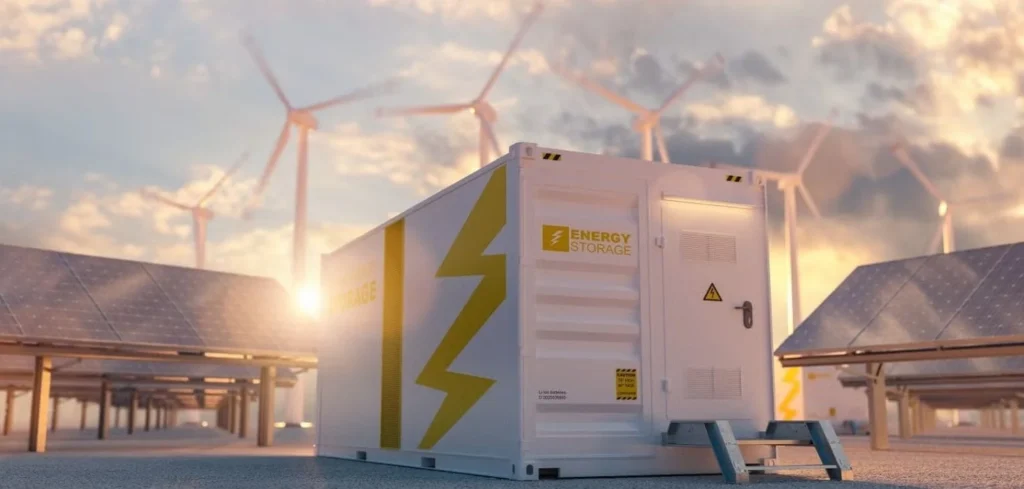
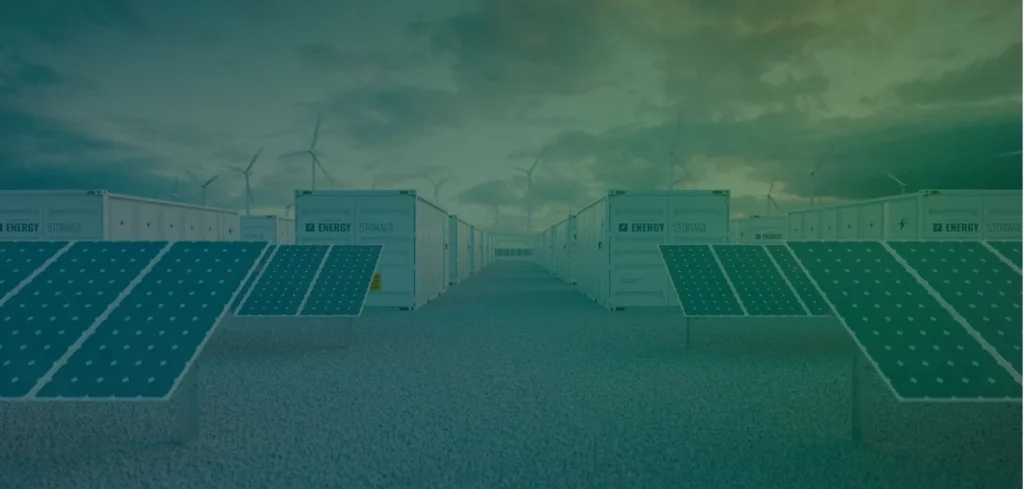
This stability was traditionally a byproduct of heavy, spinning fossil fuel turbines that provided natural mechanical resistance to sudden changes, but the energy transition has shifted this responsibility toward digital intervention. As solar and wind replace these traditional plants, the grid loses its natural “padding,” making it far more sensitive to disturbances. Consequently, ancillary services have evolved into a sophisticated digital marketplace where high-speed assets like Battery Energy Storage Systems (BESS) and automated software provide the sub-second precision required to manage a modern, decarbonized power system.
The Primary Goals of Ancillary Services:
Ancillary services are designed to support grid stability by controlling frequency, voltage, and system recovery during disturbances.
- Maintaining Frequency: Keeping the grid’s “heartbeat” at its target (50Hz in Europe or 60Hz in the US) to prevent damage to electrical equipment.
- Controlling Voltage: Managing “reactive power” to ensure electricity has the necessary pressure to travel through long-distance transmission lines.
- Grid Restoration: Providing “Black Start” capabilities to reboot the power system after a total blackout.
Why Do We Need Ancillary Services?
Ancillary services are essential because modern power systems must react instantly to imbalances caused by variable generation and demand.
- The Equality of Supply and Demand: Electricity is unique because it must be consumed the instant it is generated. If a cloud covers a solar farm or a wind gust dies down, the grid experiences an immediate deficit. Ancillary services act as the “buffer” to fill these gaps.
- Safety and Reliability: Without precise management of frequency and voltage, the electricity flowing into homes and hospitals could become unstable, leading to equipment damage, localized fires, or wide-scale blackouts.
- Managing the “Duck Curve”: As solar generation peaks at midday and drops in the evening, the grid needs fast-acting services to handle the rapid “ramp-up” of other power sources.
What Do Ancillary Services Offer?
Ancillary services provide technical grid support functions that ensure reliable electricity transmission and system resilience.
-
Frequency Regulation: Maintaining the Grid’s Heartbeat
The grid must operate at a stable frequency (50Hz in Europe, 60Hz in the US). Even a minor deviation can cause sensitive industrial machinery to fail or trigger protective relays that lead to blackouts. Ancillary services provide the constant, sub-second adjustments needed to keep this “heartbeat” steady as millions of people turn devices on and off simultaneously.
-
Voltage Support: Maintaining Transmission “Pressure”
If frequency is the heartbeat, voltage is the blood pressure. Electricity loses “pressure” as it travels over long distances. Assets provide “reactive power” to push back against this loss, ensuring that power generated at a distant wind farm actually reaches the urban center where it is needed. Without voltage support, the grid would suffer from “brownouts” and inefficient energy delivery.
-
Operating Reserves: The Emergency Safety Net
The grid must always be prepared for the “worst-case scenario,” such as a lightning strike hitting a major substation or a large power plant tripping offline.
-
Spinning Reserves:
Assets already synchronized to the grid that can increase output immediately.
-
Supplemental Reserves:
Assets that can start quickly (within 10–30 minutes) to provide long-term backup. These reserves ensure that a single failure doesn’t cascade into a regional disaster.
-
-
Inertia: Buying Time for the Grid
Inertia is the grid’s resistance to sudden change. Traditionally provided by the massive, heavy spinning rotors of coal or gas turbines, inertia provides the “kinetic energy” that slows down the rate of frequency decay. In a modern grid, batteries can provide Synthetic Inertia, using ultra-fast power electronics to mimic this physical behavior, giving the Transmission System Operator (TSO) precious seconds to respond to a crisis.
-
Black Start Capability: The Grid’s “Jump Lead”
Most power plants are “consumers” before they are “producers”. They need external electricity to start their pumps, fans, and control systems. If the entire grid goes dark (a total blackout), you need specialized assets like hydro plants or BESS with Black Start capability. These assets can start themselves in complete isolation and provide the initial “spark” to reboot the rest of the national power system.
-
Congestion Management and Redispatch
Sometimes, the grid has enough power, but the “wires” are too full to move it. TSOs use ancillary services to perform Redispatch. Paying a generator on one side of a bottleneck to turn down, while paying another on the other side to turn up. This ensures the physical infrastructure is never overwhelmed.
The Three Pillars of Frequency Regulation (FCR, aFRR, mFRR)
To maintain grid stability, Transmission System Operators (TSOs) utilize a “three-line defense” strategy. These services are activated in a specific sequence based on the speed and duration of the frequency deviation.
FCR (Frequency Containment Reserve): The Millisecond First Responder
FCR is the grid’s immediate “shock absorber.” It is a decentralized, automatic service. Meaning the asset (typically a Battery Energy Storage System) detects a frequency drop locally and reacts within seconds without waiting for a signal from the TSO.
- The Goal: To stop the frequency from falling further. It doesn’t bring the frequency back to 50Hz; it simply stabilizes it to prevent a total collapse.
- Market Characteristics: High requirements for speed and accuracy. BESS assets are the dominant players here due to their sub-second response times.
aFRR (automatic Frequency Restoration Reserve): The Digital Bridge
Once the frequency has been stabilized by FCR, the aFRR takes over. Unlike FCR, this is a centralized service. The TSO’s computers monitor the entire grid and send a digital signal to the provider to increase or decrease power.
- The Goal: To restore the frequency exactly to its nominal setpoint (e.g., 50.00 Hz) and “release” the FCR providers so they are ready for the next disturbance.
- Market Characteristics: This requires a constant digital “handshake” between the TSO and the asset. Success in the aFRR market depends on high-speed communication and automated control logic like that provided by the smartPulse platform.
mFRR (manual Frequency Restoration Reserve): Managing Long-Term Imbalances
mFRR is the final line of defense, used when an imbalance is expected to last for more than 15 minutes (for example, if a large coal plant has a mechanical failure and will be offline for hours).
- The Goal: To replace the “faster” aFRR reserves with cheaper, slower-acting power sources. This ensures that the most flexible assets (batteries) are freed up to handle new, sudden spikes.
- Market Characteristics: Historically activated via phone calls or manual dispatch, mFRR is now moving toward digital bidding platforms. Assets like hydro plants, gas peakers, and large industrial “demand-side” loads are the traditional providers here.
| Service Type (Product) | Purpose & Role | Description |
|---|---|---|
| FCR (Frequency Containment Reserve) | The Millisecond First Responder | FCR is the most rapid response. It is an automatic service where the asset (usually a battery) reacts within seconds. It is the “shock absorber” of the grid. |
| aFRR (automatic Frequency Restoration Reserve) | The Digital Bridge | aFRR is a centralized service where the TSO sends a digital signal to the asset to restore frequency. This requires high-speed communication and precise control logic. |
| mFRR (manual Frequency Restoration Reserve) | Long-Term Imbalances | mFRR is used for larger, longer-lasting imbalances. Instructions are sent by the TSO to bring the frequency back to normal within 15 minutes. |
Why Ancillary Services Automation Is the Differentiator
In these “Pillars,” the margin for error is nearly zero. As Transmission System Operators (TSOs) move toward 15-minute settlement periods and shorter activation windows, manual bidding becomes an operational risk.
smartPulse automates this entire chain—from detecting the TSO’s aFRR signal to verifying that your asset has responded correctly, ensuring you maximize revenue while maintaining 100% grid compliance. To learn more, contact our team and get your personalized demo.
Ancillary Services FAQ
Who manages ancillary services?
In most regions, they are managed by Transmission System Operators (TSOs) or Independent System Operators (ISOs), such as National Grid (UK), TenneT (Germany), or PJM (USA).
Can renewable energy provide ancillary services?
Yes. While wind and solar are variable, they can provide “synthetic inertia” and voltage support via smart inverters. However, Battery Energy Storage (BESS) is currently the most effective non-fossil provider of these services.
What is the difference between active and reactive power?
Active Power is the energy that actually performs work (lighting a bulb, turning a motor). Reactive Power maintains the electromagnetic fields needed to move that active power through the transmission lines.
How do I make money with ancillary services?
Providers are usually paid for Availability (being ready to help) and Activation (actually delivering power). Using software like smartPulse allows you to “value stack” these with day-ahead trading.
What is the difference between “Availability” and “Activation” payments?
In most ancillary markets, you are paid twice. Availability (Capacity) payments are what you earn just for being “on standby” and reserving a portion of your asset for the TSO. Activation (Energy) payments are the additional revenue earned when the TSO actually calls upon your asset to inject or absorb power.
How does the “15-minute shift” in European markets affect ancillary services?
As European energy trading markets (like EPEX SPOT and Nord Pool) move to 15-minute settlement periods, the “tempo” of grid balancing has increased. This creates more frequent price signals and higher volatility. For ancillary service providers, this means bidding must be more precise and automated to match the shorter, more dynamic windows of the Day-Ahead Power Trading and Intraday Power Trading markets.
What is “Value Stacking” in the context of ancillary services?
Value stacking is the practice of using a single asset (like a battery) to generate revenue from multiple sources simultaneously. For example, a battery can perform Energy Arbitrage (buying low/selling high) while also bidding its unused capacity into the FCR or aFRR markets.
What are the PICASSO and MARI platforms?
These are the new European-wide platforms designed to standardize cross-border trading for ancillary services. PICASSO is the platform for the exchange of aFRR, while MARI is for mFRR. By connecting different national TSOs, these platforms increase market liquidity and allow a provider in one country to help balance the grid in another.
What is a “TSO-NEMO” connection?
A TSO (Transmission System Operator) manages the physical grid, while a NEMO (Nominated Electricity Market Operator, like EPEX SPOT) manages the digital power trading platform. For ancillary services, these two must be perfectly synced. Software like smartPulse acts as the bridge, ensuring your bids on the NEMO platform are technically feasible for the TSO’s grid requirements.
The smartPulse Approach to Ancillary Services
To capture the full value of these markets, smartPulse has developed a unified Ancillary Services Management features designed to remove operational friction.
- End-to-End Automation: From bid strategy to asset execution, the system handles the high-speed requirements of modern TSOs.
- Unified Management: A single interface for FCR, aFRR, and mFRR markets across different regions.
- Closed-Loop Activation: Instantaneous signal-to-asset commands ensure 100% compliance and maximize activation revenue.